Incredible willpower
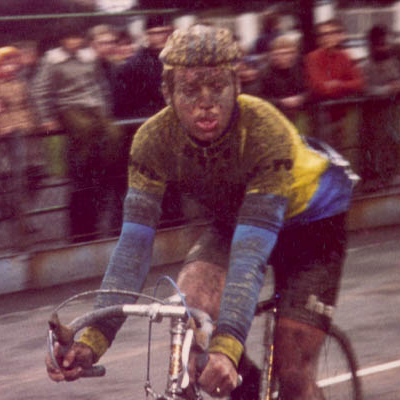
Meanwhile Hennie punishes his body day in, day out. Right at the very start of his love affair with cycling he shows incredible willpower. He decides to take part in the ‘wild’ Ronde van Wierden with four friends. How do they get there? By bike, of course. When the day comes, the rain is bucketing down. None of his friends fancies riding all those kilometres to Wierden in such foul weather. But Hennie, who has no idea yet how to get there, does get on his bike. A promise is a promise, and he pedals off towards Almelo in the pouring rain. You don’t stay at home because of a drop of rain. On the way he stops once to wring out his soaking clothes. When he finally arrives at the course, the riders are already lined up for the start. Too late, the organisers decide – but they have reckoned without Hennie. He has, for heaven’s sake, cycled all the way from Denekamp. ‘In the rain, what’s more,’ he adds, needlessly. All right then, he can start, but first he must go and fetch a race number. Hennie suspects a trick – he thinks the riders will be sent on their way while he is still busy fetching his number – and sets off without one.
Hennie turns out to have talent. He is in the lead group of four and has only one rider ahead of him in the final sprint. At the prize table he can choose between a little cup and a proper cycling jersey. It is very tempting to swap his football shirt with the sleeves cut off for a real cycling jersey, but in the end he chooses the trophy, the first in a long line. That afterwards he has to cycle home through the pouring rain again with his little cup hardly bothers him. Kilometre after kilometre he grinds out, first to Almelo and then along the sodden roads for that endless stretch to Denekamp and Noord Deurningen. It is already dark when he arrives at the farm on the Schotbroekweg, proud and overjoyed with his little cup. He is just as proud of it as he will later be of his Olympic medal.
A pleading letter
He rides from one wild race to the next and invariably finishes among the prizes. The highlight for ‘mennekes’ – young lads – with racing ambitions is undoubtedly the Tour de Junior in Achterveld, the brainchild of Jan Schouten, who finds host families in the village and the surrounding area willing to put up the budding little racers for the best part of a week. In 1964 – just 15 years old – Hennie also applies for a place in the field, but is turned down because the start list is already full. He is inconsolable, and writes a touching letter of appeal to the organiser, Schouten. ‘Dear Sirs. I recently received word that I cannot take part in the Tour de Junior, as I am now on a waiting list. I would like to ask whether there might still be a possibility of taking part. For I have already done a great deal of training, and all the more so now that the doctor’s certificate has also been sent. I close herewith, hoping still to be able to take part and to receive word back from you.’
The organiser relents: Hennie can take part. His first Tour de Junior passes fairly anonymously, but when he returns a year later, the little Tukker, as people from Twente are known, is the driving force of the race. He is the great attacker, the man who never stops attacking, and in the end that earns him the title of ‘most combative rider’. Later, among the professionals, it will become his trademark. At home, Hennie’s cycling ambitions are viewed with scepticism at first. Each of the six sons and the daughter is free to choose whatever sport they like, but cycling… that lies a very long way outside the family’s field of vision. Still, they let him get on with it, seeing too the boundless enthusiasm with which Hennie throws himself into cycling.
A year after the second Achterveld adventure, things get more serious. Hennie receives an official racing licence from the Royal Dutch Cycling Union. As novices (the youth category), he and his mates sometimes pedal dozens of kilometres to a race, ride it, and afterwards cover those same dozens of kilometres on the way home. Sometimes the course is so far from Twente that Hennie asks for a ‘berth’ with riders who have transport. Such as the building contractor Meijer, whose son Theo is a rider who can also turn a hard pedal. The bikes are fastened with toe straps to a rack mounted on the car roof. There are other riders, too, who let him ride along now and then. The contraption on the car roof does not always hold up, as Hennie and his fellow passengers discover when they are heading home in early spring after a training race in Ekehaar, near Assen. One of the rack’s feet breaks. Dollops of wet snow on the windscreen, alternating with ice-cold rain. But Hennie and his mates Theo Meijer, Ben Wolkotte, Johan Pegge and Marinus Ekkelboom have to get home somehow. So they decide to wind down the rear window and take turns holding the rack in place with one arm out of the car. The boys almost freeze, but there is barely a grumble. It is all part of the game, they feel.
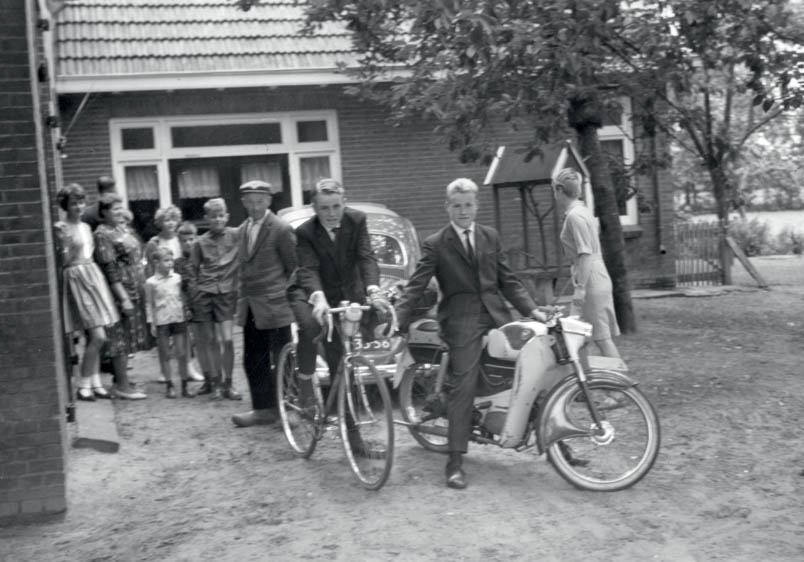
Hennie is allowed to ride the Tour de Junior after all. They all see him off (from the right): his sister Maria, his brother Frans on the moped, Hennie, his father Gerard and his mother Johanna, among Hennie’s cousins
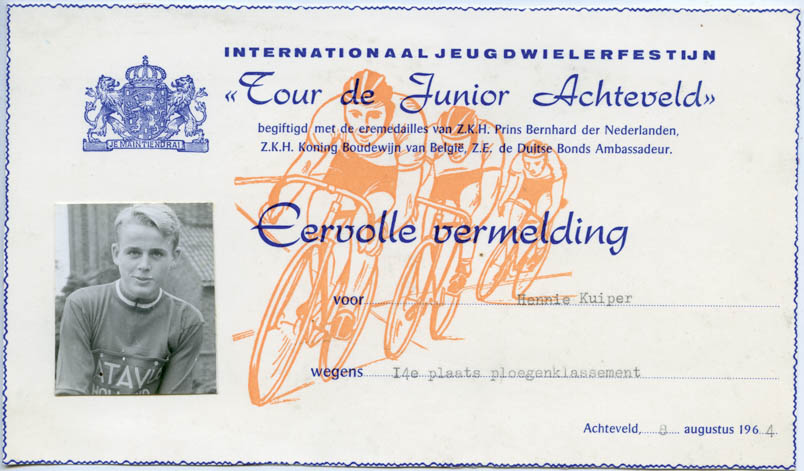
Hennie comes away from his first Tour de Junior with a certificate. In August 1964 he receives an ‘honourable mention’ when his team, ‘Batavus Rijwielen’, with the local Achterveld favourite Frans Stapelbroek as leader, finishes fourteenth in the team classification. In 1964 a total of 72 young riders take part, divided into… fourteen teams
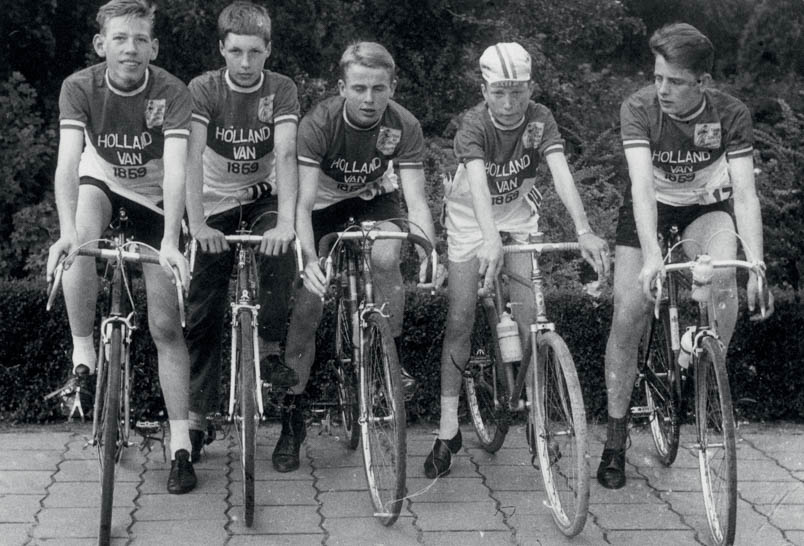
In 1965 Hennie (centre) starts the Tour de Junior as team leader, in the red and white jersey of the ‘company team’ of ‘Holland van 1859 Verzekeringen’. Around Hennie (in the centre) are the four others (from left to right): Adri Raemaekers (14, from Belgium), Tom Kemperman (15, and like Hennie from Denekamp), Ton van Dijk (15, from Mijdrecht) and Jan Oude Hengel (16, from Rossum)
First win
For Hennie Kuiper, 15 May 1966 is a historic day. For the first time in his career he wins an official race, in Emsdetten in Germany. He is 17 at the time. In two years as a novice he crosses the finish line with his arms raised five times. Usually he arrives alone. His lack of pure speed reduces him to a bit-part player in a final sprint. He finishes second at least seven times in those novice years, and all of that together points to more than average ability. Not everyone is convinced at this stage. Broer Oude Keizer, for example, chairman and trainer of the OWC, Hennie’s cycling club. He is a man with a name in the sport, certainly in Twente. Oude Keizer is a former professional who rode six-day races in the era when riders still stayed on the bike day and night. He is from the days of Jan ‘Cannonball’ Pijnenburg and Piet van Kempen, famous names from a distant past.
Hennie goes up to the chairman, feeling proud. After all, by then he has already won two races, hasn’t he? ‘What does Broer think?’ Broer asks him: ‘Do you want an honest answer?’ Hennie nods. He is expecting at least some praise, but instead Oude Keizer says: ‘You’d be better off packing it in.’ Hennie could not be more disappointed than he is by that answer. ‘So what am I doing wrong?’ ‘Well, you’ve got no speed, and that way you’ll never get anywhere.’ Ouch, that hurts. You expect praise and get a mental punch instead. It takes him a while to pick himself up. But then he eagerly accepts the chairman’s offer to follow a programme under his guidance that could make a rider of him.
Hennie and other ambitious OWC members are put through a gruelling training regime. Three of them stick it out: Hennie, Tonny Bruns and Herman Snoeijink, who later becomes the amateur with the most victories in the Netherlands (365). They reap the rewards of their training and come on in leaps and bounds. Broer Oude Keizer makes Hennie strong with his special programme, in which interval training plays a big part. Oude Keizer has a special massage oil, a mixture of cajeput oil, camphor spirit, salad oil and Tyrolean oil. When he is making up the oil, the Oude Keizer household reeks of it for days. Broer is Hennie’s cycling father.
On the day Kuiper rides to gold in Olympic Munich, his trainer, at home in Oldenzaal, cannot hold back his emotions. He sits in front of the television in tears. Then he fetches the flag and hangs it out on the front of the house.
How strong the bond between trainer and pupil is becomes clear when Broer Oude Keizer dies during a training ride. Hennie goes to the funeral home, walks up to the coffin and stands by the bier for half an hour with his hands behind his back. He realises that he owes his trainer a great deal. His trainer’s death has slowed Hennie’s development. The work he did beforehand under his trainer’s impetus pays off in races. Not that Hennie wins much – he is simply no sprinter – but he is anything but an anonymous figure in the peloton. He is a pure attacker, attacks to his heart’s content and lets himself go on the bike. Hennie is enjoying himself; he loves every bit of it. And above all he wants to discover what else the (cycling) world has to offer.
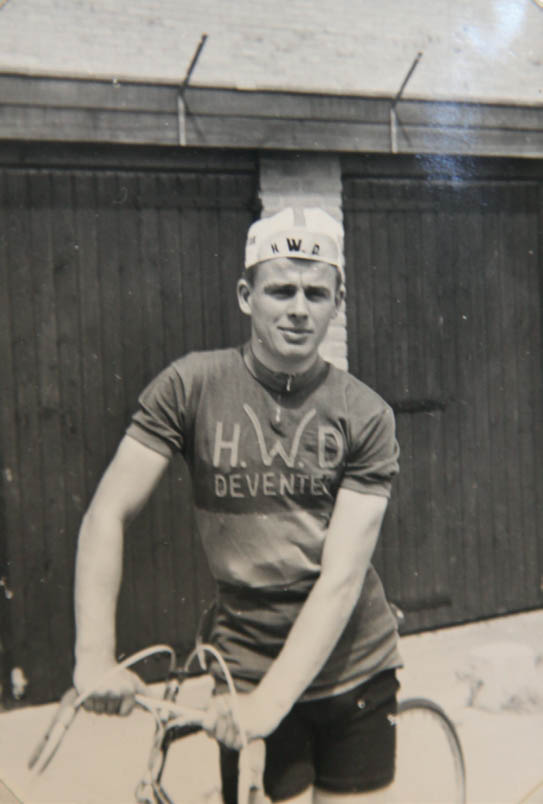
Hennie at home in the jersey of the Deventer bicycle dealer Han Wurtz
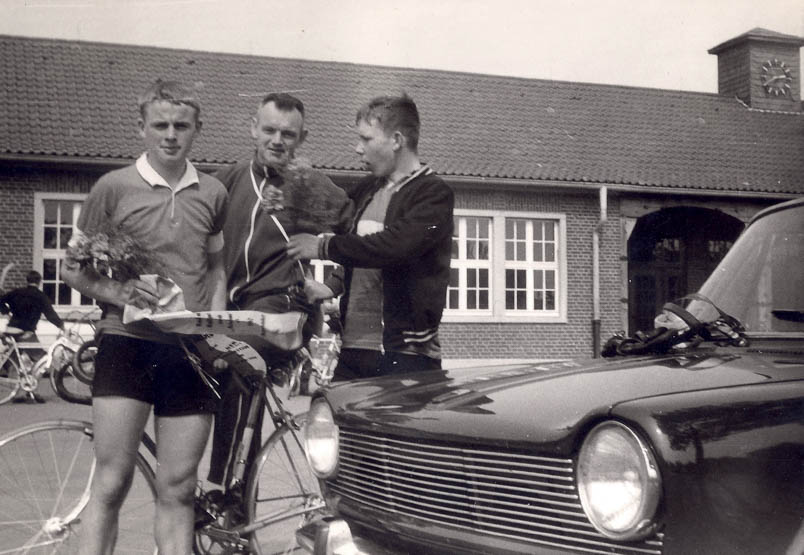
On 15 May 1966 Hennie Kuiper wins his first race, in Emsdetten in Germany. On the right his training partner Ben Wolkotte. In the centre the mechanic Bertus van der Horst
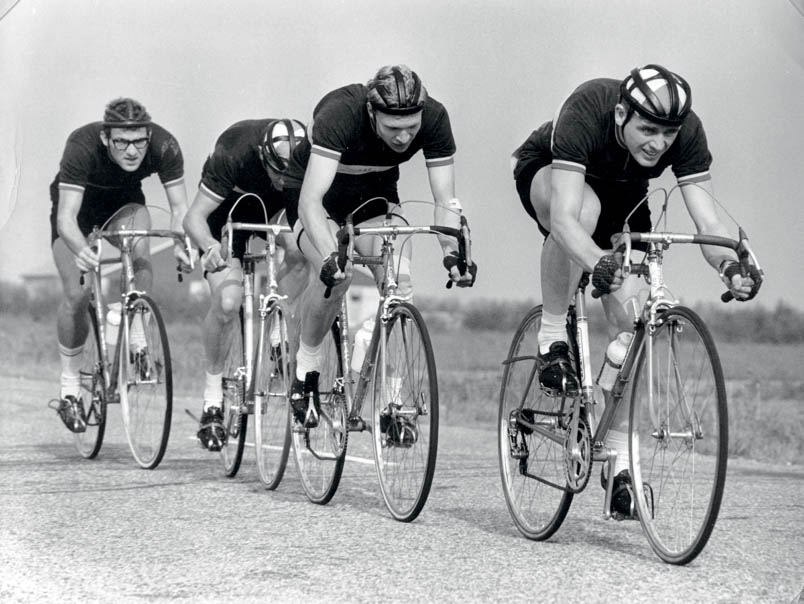
The 1969 club championships in Dronten. OWC finish 57th in the B category. From the front: Hennie Kuiper, Tonnie Wissink, Theo Franke and Leo Engbers
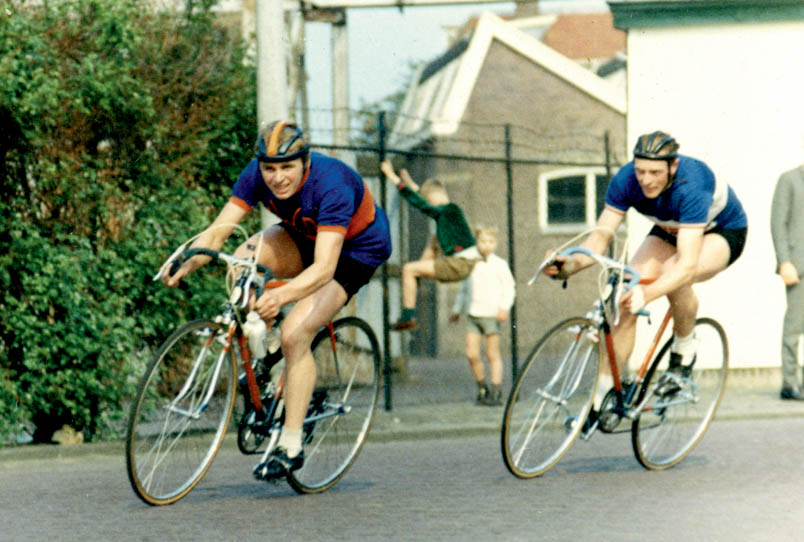
As a first-year amateur, Hennie rides the Ronde van Nijverdal in 1968, with Zwier Sellis of KWC (Kamper Wieler Club) from Kampen on his wheel. The local children are paying little attention
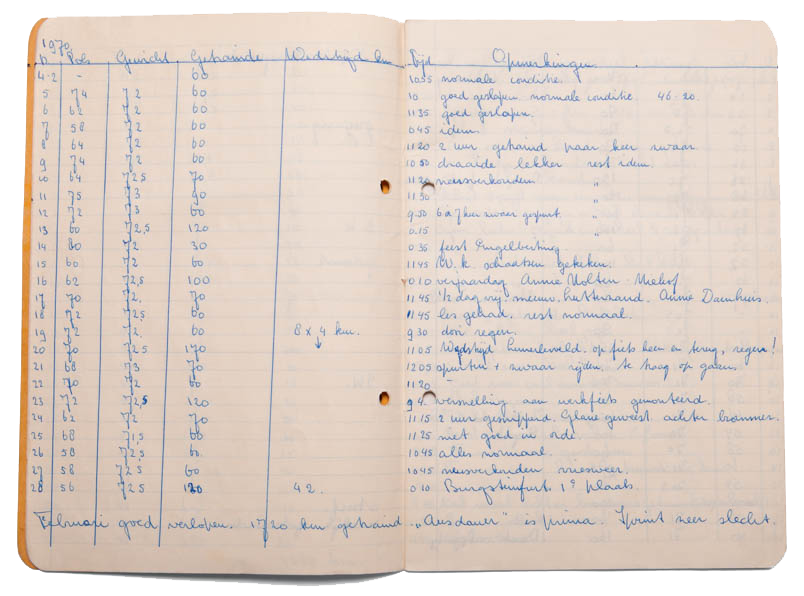
Hennie Kuiper takes the job of cyclist seriously from early on. He keeps a careful record of his performances and progress. Look at the bottom line, which holds his verdict on February 1970: ‘February went well. 1720 km trained. “Ausdauer” excellent. Sprint very poor’
To the first cobbles in a 2CV
In 1968 Hennie has a modest sponsor: Han Wurtz from Deventer, a bicycle dealer who helps a number of riders with equipment under the name HWD. His trainer Oude Keizer tells Hennie: ‘If you want to be a rider, you have to race in Belgium. Buy a newspaper there and look in the cycling column to see where there’s a race that day.’ His teammate Hans Troost is at that time the proud owner of a Lelijke Eend – an ‘Ugly Duck’, as the Dutch call the Citroën 2CV. If Hennie wants to come along to Belgium, he has to report to Hans in Deventer. So Hennie packs into the bag on his handlebars the provisions his mother Johanna has carefully prepared: a thermos of tea, rice, chicken legs and bread. He rides to Oldenzaal to continue by train towards Deventer, where Hans is waiting with his little Duck.
The pair cross the border at Valkenswaard, buy a paper and see two races listed for that day: one near Menen, on the French-Belgian border, and another in Kruibeke near Antwerp. Hans thinks it is all much too far and wants to go home. Not so Hennie. ‘I really do want to race.’ It takes some persuading, but Hennie gets his way. For Hennie the journey to the race is already one big party. They drive through the Kempen, past Herentals, home of the great cycling hero of the day: Rik Van Looy. ‘It made me happy. It gave me a boost for the race before it had even started.’ Near Antwerp the pair turn off the motorway. They come across a race, but soon realise that the riders are not amateurs but professionals. Where is the amateur race? The man they ask looks rather confused. ‘Ah well, you’ll be meaning the enthusiasts? Then it’s straight on.’ How far is that, then? Half an hour, comes the reply. They are there within five minutes. The Fleming is still reckoning distance by the time it takes to get there on foot.
The Dutch riders report to collect their race numbers. They have to pay 20 francs for insurance and a deposit of 180 francs, which they get back when they return the number. There are big names at the start of the amateur race. Big names in Hennie Kuiper’s eyes, at least. A rider like Henk Benjamins, for example. The course comes as a big surprise to the Dutchmen. It begins on an asphalt road, then the riders turn left and… come up against enormous lumps of stone that, to them, seem impossible to ride. Hennie does not know what has hit him. His wheels bang from one stone to the next. It is oppressively hot that day. But the sky clouds over, and when the race is well under way, an almighty storm breaks.
Relishing the misery
The rough cobbles become treacherously slippery. To the riders it feels as if the road has been smeared with soft soap. The inexperienced lads from the east of Belgium’s northern neighbour not only have the greatest difficulty keeping up with the pace, they also have to try to stay upright. The latter – staying on their feet – more or less works out; the former – keeping up with the pace – not at all.
Hennie is passed by one rider after another. It goes on like that until first the peloton and then even the last straggler have disappeared from view. But giving up is not in his vocabulary. He would sooner eat his spokes than climb off. Hennie pushes on, utterly alone. The Tukker is the very last to reach the finish, and a blessed release it is. He has had his first taste of the cobbles.
When he crosses the finish line – more dead than alive – he says to his teammate Hans Troost: ‘I’ve never been so shattered in my life.’ He is directed to a garage where a few folding chairs stand ready, with a little bucket of water in front of them. ‘No shower, nothing, no heated room where you could get your breath back in peace.’ But you don’t hear Hennie complain about it. He regards the whole day as a marvellous adventure. He is loving it. Afterwards the bikes are loaded onto the roof and the long journey home begins. Somewhere between Holten and Markelo – the A1 motorway has yet to be built – Hans Troost stops the car. Before they set off, Hans had already said: ‘I can’t take you home, because I’ve still got to go to my father’s birthday.’ Hennie takes his bike and rides the fifty kilometres to his parents’ farm. At two in the morning he reports at his parents’ bedside. Hennie is back from his first race on the cobbles.
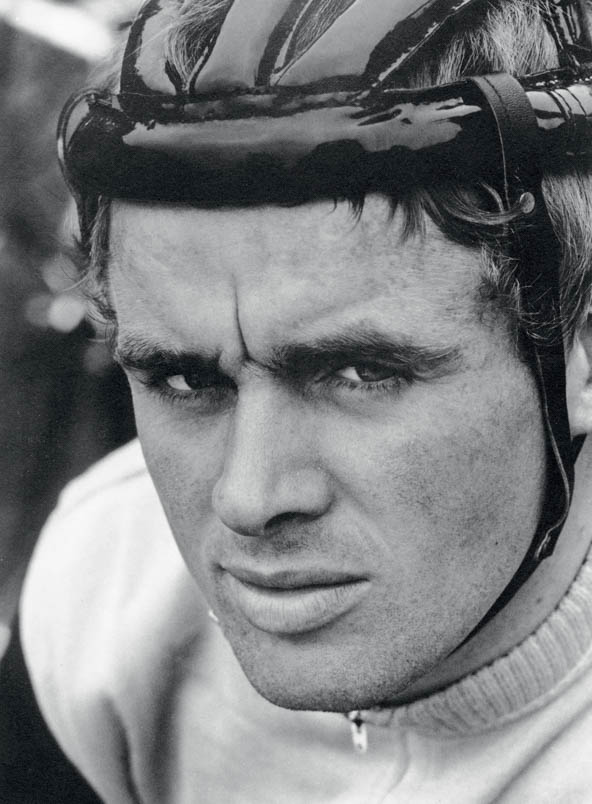
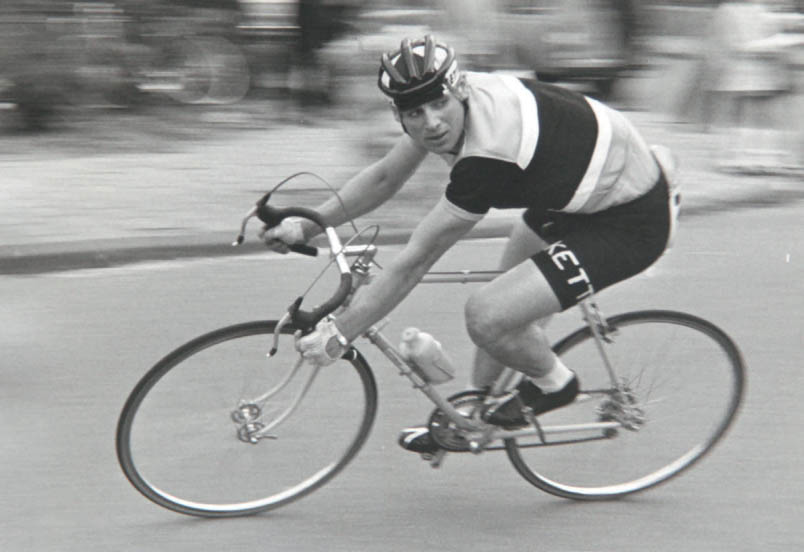
Hennie rides alertly, keeping an eye on the competition in the 1970 Ronde van Tegelen
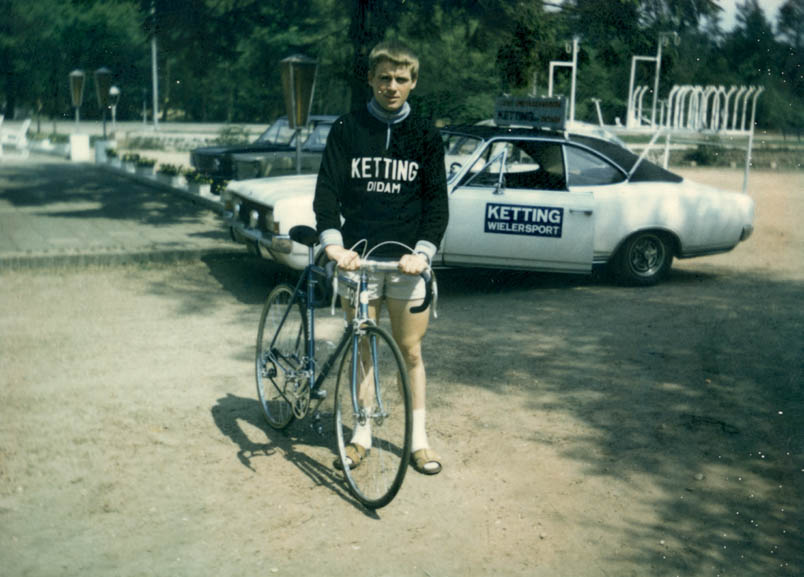
Hennie displays his kit as he starts racing for the Ketting Wielersport amateur team in 1970
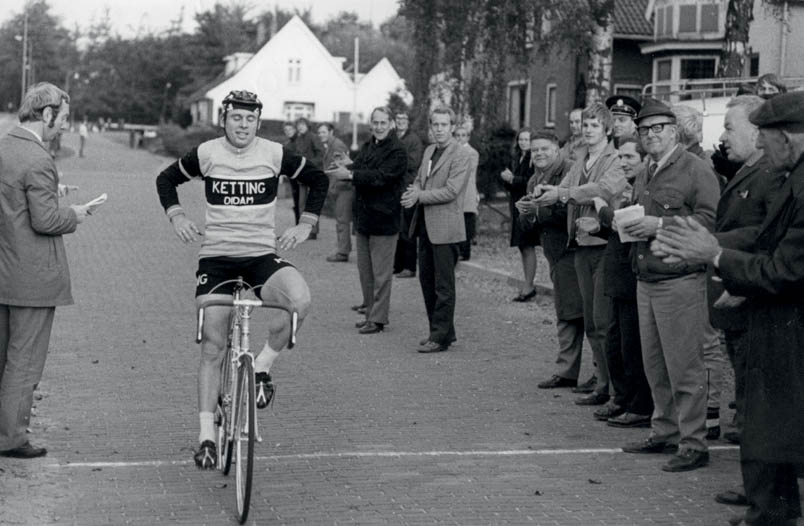
Visibly pleased, Hennie Kuiper crosses the line at the club championships in Oldenzaal. On the left, commissaire Ben Roesink; to Hennie’s right, in a black duffel coat, OWC chairman Herman Nijhuis, with Willy Wissink (applauding) beside him
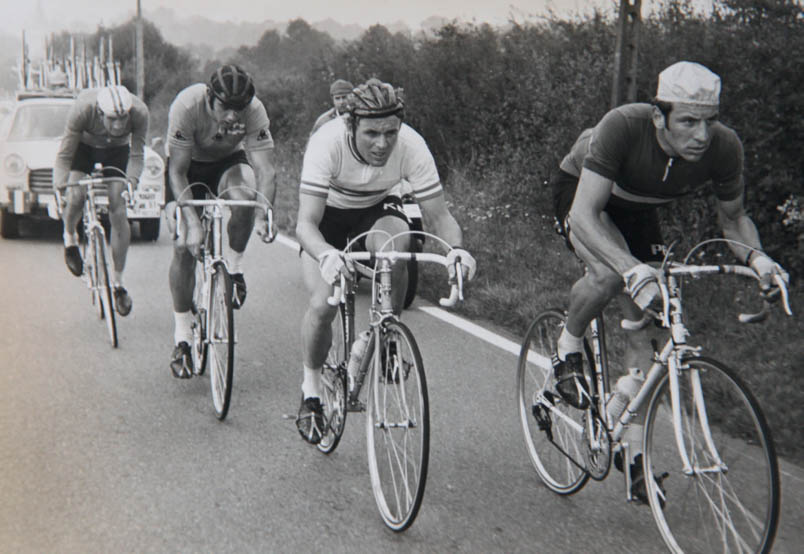
In the third stage of the Tour de l’Avenir, from Niort to St. Yrieix on 15 September 1972, Hennie makes a bid for power. He breaks away alone after 79 km and is later joined by the Czech Aloïs Holík, the Frenchman Claude Magni and the Italian Tulio Rossi. The breakaway will not last. Here Magni is setting the pace
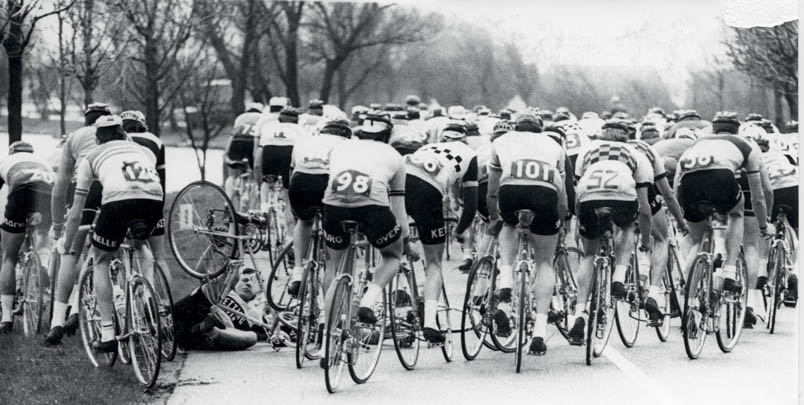
On 8 April 1972 – a week after his win in the Ronde van Drenthe – Hennie crashes in the very first kilometres of the Tour of North Holland. In a race dominated by the wind, he still finishes 23rd in the end