MONUMENT 2
Tour of Lombardy 1981
His new approach to training means that in 1981 Hennie Kuiper has to settle for a very modest supporting role in his beloved Tour de France. In the end he finishes in an anonymous thirtieth place, far below the level he had reached in previous years. After the Tour he cracks the whip once more. He uses the criterium circus to build towards a new peak. Just as in 1975, the year of his world title, he cycles dozens of kilometres to a race, rides the criterium and then goes back to his training once it is over. In the Tour of the Netherlands he follows the same routine: after the stages, which are good training in themselves, he piles on a solid number of extra kilometres. He often rides behind a moped to build up his speed. Hennie does all this together with Adrie van der Poel, his teammate and fellow Brabant resident. Whatever it takes, he wants to shine once more in the last few months of the season.
It is not only personal success that counts, but team success too. That year the DAF Trucks outfit is so successful that it takes an ever firmer hold on the standings for the Trade-team World Cup. The DAF management – and director Van Doorne in particular – sets great store by it, so directeurs sportifs De Bruyne and De Cauwer drive their men to the limit. On the eve of the 1981 Tour of Lombardy, DAF Trucks lead the World Cup standings. All hands on deck, then, because the Belgian IJsboerke team has spent the past week announcing that it will go on the attack. The DAF team fly out to Italy together. Roger De Vlaeminck is due to arrive on a later flight, but when DAF staff go to collect him from the airport, they find De Vlaeminck’s bike on the carousel – and discover that the rider himself has decided to stay at home. Typical Roger. Directeur sportif De Bruyne sees his chances of winning the World Cup go up in smoke. What are they to do without Roger? Hennie Kuiper tries to reassure De Bruyne, but the directeur sportif is not convinced.
The Tour of Lombardy is a race of rare beauty, where breathtaking scenery provides a heavenly backdrop year after year, and it is circled in red in Hennie’s diary. This race, which until 2011 brought the cycling season to a close, bears the poetic nickname La corsa delle foglie morte, or ‘the Race of the Falling Leaves’. Before the 1981 edition only one Dutchman graces its honours list: the Zeelander Jo de Roo, who was first to reach the finish in Como in both 1962 and 1963. Early in the race things do not appear to be going all that well for Kuiper. Adrie van der Poel directs his team leader onto his back wheel and takes him up to the front. Hennie himself was never worried for a moment. Afterwards he hears that the Dutch directeur sportif Jan Gisbers of the Van Erp team had predicted: ‘Nothing will come of Kuiper today. He’s right at the back.’ Nobody need worry about Hennie that day. ‘Because I was doing it on purpose, racing at the back like that. First sit there comfortably for a while, and later, when the race really catches fire, ride up to the front.’
The pace is fierce from the start. The lead group that forms contains not a single rider from the DAF team, but it does include men from their great rivals, IJsboerke. Directeur sportif Fred De Bruyne is beside himself. Hennie urges him to stay calm. ‘Easy, Fred.’ ‘I knew this race and I wasn’t too bothered. Sometimes I was a bag of nerves, but there were also times when I could sit quietly in the peloton and wait for my moment.’ With 80 kilometres to go, Gibi Baronchelli takes flight on the climbs of the Intelvi and the Schignano. In no time the Italian builds up a lead of more than three minutes. The lead group crumbles. One rider after another drops back into the peloton. Kuiper seeks out the team car. ‘Do you see what’s happening? I predicted it, and I’ll tell you something else, Fred: I’m going to win this race.’
The DAF team leader attacks on the second ascent of the Intelvi, with its surface of small cobbles, some 45 kilometres from the finish. He quickly pulls away from the peloton and swoops down in record time on the escapee, who has been held up by a puncture. ‘I caught him, and he tucked in on my wheel straight away.’ That happens 27 kilometres from the line. Baronchelli has fought himself to a standstill. That becomes clear when Hennie raises the pace on the final climb, the San Fermo della Battaglia, and the Italian has to let go at once. De Bruyne, still nervous, brings the team car up alongside his team leader and warns: ‘Uh-oh, they’re coming.’
But they don’t come.
After the last climb comes a fine descent, and then the route runs on along Lake Como. There the teams of Roberto Visentini, Francesco Moser and Beppe Saronni try to close the gap to the Dutchman. Now and then they draw closer, but Kuiper does not give in. ‘I thought: as long as they haven’t drawn level with my bottom bracket, I’ll keep going.’ Kuiper proves irresistible. In the streets of Como he claims his second Monument, his second classic within a year. He is glad to have won without Roger De Vlaeminck in the race. ‘After the Tour of Flanders everyone said Roger had helped me to that victory. But now I’d been able to prove that I could do it on my own too.’
There is double joy at DAF. For besides team leader Kuiper’s triumph there is more to celebrate: victory in the prestigious Trade-team World Cup. The next day the whole team travels to Verona, where a big trade fair for lorries is being held. DAF Trucks, naturally, are there in force. It is the moment to wring every last drop of publicity out of the World Cup. The whole team stands proudly gathered around the World Cup trophy on the DAF Trucks stand. Attention in abundance from all the media. The sponsor could not wish for anything better. Kuiper: ‘The director of DAF Italia was as happy as a child.’ ‘No wonder,’ Van Doorne explains. ‘Italy was a very hard market for us to break into. Everything was Fiat, and perhaps a few German makes like Mercedes. Hennie’s win in the Tour of Lombardy and our victory in the Trade-team World Cup brought about a complete change in the way dealers thought. From then on there was interest in becoming a DAF Trucks dealer too. Those cycling successes broke the Italian market open.’
Despite those successes, the DAF cycling team is nonetheless disbanded a season later. The great champion of the cycling project, Willy van Doorne, leaves the company to start up a new business of his own, Willy van Doorne International. The DAF Trucks board wants to spend the money that had been going into the cycling team in some other way. Van Doorne, a cycling man to the core, winds the project up with care, helps in the search for a new backer and makes sure that the riders find a new home. When the cyclo-cross rider Hennie Stamsnijder is in danger of falling by the wayside, Van Doorne puts him under contract as a one-man team. It is the final exploit of an exemplary cycling venture.

Hennie Kuiper has hardly any trouble dropping Gibi Baronchelli

In the finale of the 1981 Tour of Lombardy, Hennie Kuiper is left alone with Gibi Baronchelli


In 1983 Hennie Kuiper again comes very close to victory in the Tour of Lombardy. But he loses out in the sprint to (from left to right) Adrie van der Poel (third), Sean Kelly (first) and world champion Greg LeMond (second). Behind Van der Poel the Swiss Gilbert Glaus rides to sixth place, and behind Kelly Francesco Moser to fifth

Hennie Kuiper is honoured on the podium in Como for his second win within a year in one of the five Monuments
So nearly a repeat
Two years after his win in the Tour of Lombardy, Kuiper again comes close to victory in the ‘Race of the Falling Leaves’. The finale of that Tour of Lombardy has everything to do with the 1983 Vuelta. Kuiper, who is already past his best as a stage racer, sees an opportunity for Bernard Hinault in a stage where a strong wind is blowing. He tells the Frenchman: ‘If you want to win, you have to form an echelon now. We’ll join in.’ ‘Non, c’est pas le moment,’ replies Hinault, who a few moments later comes to the conclusion that Kuiper is right. He seeks Kuiper out and says: ‘Allez.’ The teams move up to the front, and before the Spaniards realise what is happening, the peloton splits apart. The racing is flat out. Only one Spaniard has managed to squeeze into the echelon: Marino Lejarreta. The rest have no chance of a high placing in the overall standings. The Spaniards are furious. They swear revenge.
In the Tour of Lombardy, Hennie is the target of that revenge. From the start Lejarreta sticks to his wheel. Only in the last few kilometres, when the sprinters are already jockeying for position, does Lejarreta lose Kuiper’s back wheel – and Kuiper reacts like lightning. He throws the chain onto the 12 – the biggest gear – and flies past the peloton at full speed before it has wound itself up to top speed. The sprinters are caught off guard. Had the Swiss Gilbert Glaus not given everything to get close to Hennie, Kuiper would have won Lombardy for the second time. As it is, Kuiper is beaten by the Irishman Sean Kelly, who wins his first classic, by the American Greg LeMond and by a disappointed Adrie van der Poel. Kuiper’s move cuts across Van der Poel’s plans and puts paid to his sprint tactics. ‘Otherwise I’d certainly have won,’ he says 34 years later. But for Adrie, too, the old rule holds: in top-level sport, ‘if’ doesn’t count.
The in-between year
The year between his second Monument, the Tour of Lombardy (1981), and his great triumph in the third, Paris-Roubaix (1983), is not the most glorious of Hennie’s career. He finishes the Tour de France ninth overall. He shines one last time in a mountain stage, the fifteenth, which runs from Manosque to Orcières Merlette. Time after time he is dropped in the battle with Bernard Hinault and Joop Zoetemelk. And as many times he fights his way back. In the final metres he latches on to the illustrious duo once again. The three of them cross the line together. Kuiper surpasses himself that day. Never again will he produce such a performance in a mountain stage. Hennie was never a true climber, but there were days when he could take on the very best. After the fifteenth stage of the 1982 Tour, those days are gone for good.
There have been decades in Dutch cycling when a place in the top ten would have been celebrated as a tremendous feat, but Kuiper considers ninth place beneath him. ‘Adrie van der Poel actually helped me to finish that high.’ In the penultimate stage, 161 kilometres from Sens to Aulnay-sous-Bois, a breakaway forms, partly thanks to Van der Poel, which Hennie manages to join but from which several of his rivals for a high placing are missing. The Belgian Daniel Willems takes his second stage win of this Tour, but what matters more to Kuiper is that he gains time. ‘That way I clawed back so much of my deficit that I climbed to ninth place. But I was no longer riding the Tour to win it. I’d done that up to and including 1980. After that the classics were my priority.’
One more performance stands out in 1982: his victory in the Grand Prix de Wallonie. The race is relatively little known in the Netherlands. Even so, it is a race with an extremely selective course, tailor-made for Hennie Kuiper’s legs when he is in good shape. He is in top form that day, rips the whole field to shreds and wins gloriously after a long solo in the finale. In the streets of the finishing town, Charleroi, Hennie just manages to hold off the neo-pro Gerard Veldscholten of Peter Post’s team by a few metres. Unfortunately for him, outside Belgium – and outside Wallonia above all – the race has too little prestige to be seen as anything special.
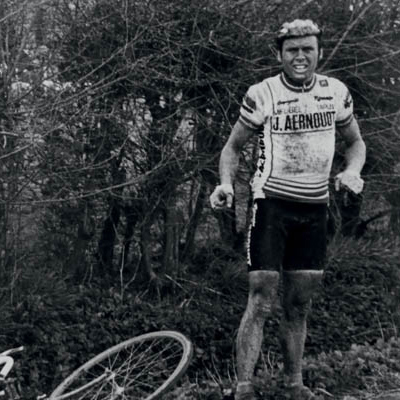
To Hennie’s sorrow, DAF Trucks pulls out of professional cycling. The sponsor’s boss, Willy van Doorne, fails to persuade enough of the group’s branches elsewhere in Europe to put millions into funding a professional cycling team once again. Directeur sportif Fred De Bruyne asks his men to hold off signing for another team. ‘Stick together now, lads. The staff are staying loyal to the team too. Face up to your responsibilities.’ Kuiper, who could easily find a place elsewhere, waits. De Bruyne goes looking and eventually finds the furniture giant Jacky Aernoudt willing to put enough money on the table for another season. The start is promising. ‘With a line-up that included six amateurs, Aernoudt won the team time trial in Paris-Nice. With lads like Frits van Bindsbergen, Nico Emonds, Henri Manders, Eric Vanderaerden, Willem Van Eynde and Rudy Rogiers we performed superbly,’ Kuiper notes with satisfaction. He is ready for the new season.

With two Monuments in one year Hennie Kuiper contributes all he can to overall victory in the Trade-team World Cup, a trophy that DAF director Willy van Doorne in particular greatly appreciates