Dramatic
While Kuiper is making more and more of a mark in his sporting life, in private things are going less well for Hennie. For a long time the marriage to Ine seemed a bond for eternity. But the worlds in which Hennie the rider and Ine the caring housewife live are so utterly different that it ends in a break-up. As his sporting career progressed, Hennie and Ine grew apart little by little. It is a creeping process that cannot be turned back. He is taken completely by surprise. But when he is confronted with the problems, he is convinced that it will all come right. In true Twente fashion he says: ‘I thought: I’ll put my head down and I’ll manage it.’ But there is nothing left to save. ‘It was awful,’ Hennie recalls. ‘The period when this was going on was lost time for me. You live in a trance, you escape into your work. The house feels empty. There is only one word for it: dramatic.’
Ine Nolten gets to know him when Hennie is a lad of 14. ‘He was always very serious. I wouldn’t really call him shy. Very modest, rather. We liked each other from the start, and that grew into courting.’ She accepts his complete devotion to his sport, cycling. Everything has to make way for it. When he is abroad in his amateur days for races such as the Tour of Yugoslavia, of Belgium or of France, communication is limited to a picture postcard. In the seventies the internet is still a long way off, and a phone call is expensive. How hard Hennie finds it to show affection is clear, among other things, from the words – or rather the lack of them – on those postcards. Ine does not mind. Not then, and not now either. ‘That was simply how things were in this part of the world. You kept your feelings to yourself. It’s very different now. You’re more open with each other and with the children.’
For Hennie the world is straightforward: he is a professional rider and does everything he can to make the most of it. For himself, of course, but just as much for Ine and later, when two boys are born, for the family. A cycling family cannot be compared with an average family in society. It makes special demands on both partners. The house, the upbringing and the family are Ine’s department; Hennie makes sure there is the money for a good life. Later, yes later, there will be time to enjoy things together. That is not to say there is nothing to enjoy in the meantime. They go on lovely holidays. But later it will all be even better, they tell each other. When their first son is born, in 1974, Hennie is just as happy as Ine. When it comes to choosing a name, the sport comes into the picture again. ‘Patrick’ is the name, and it is to be pronounced the Flemish way, so Patrick and not Petrick, as English speakers are used to. For the first name is borrowed from the Belgian sprinter Patrick Sercu. If Hennie hoped to draw inspiration from that name to sharpen up his sprinting a little, it did not work. Even after Patrick’s birth he did not become a sprinter. For their second son, born five years later, they choose together the first name of the tennis hero Borg. It is to be an ‘o’ without the dots: Bjorn. And so the couple have worked their love of sport into the first names of their offspring.
Back to Twente
After Kuiper’s career as an active rider, the family returns to its roots, to Twente. For a year they first live in their holiday bungalow on a holiday park in Denekamp. Meanwhile the building of their new luxury home is nearing completion. But Ine is far from happy. She wants to take a different path. Hennie has to respect that. Ine goes to live on her own.
By this time the ‘children’ have become older teenagers (Bjorn) or young men (Patrick). At first Bjorn moves in with his mother; Patrick opts for his father’s luxurious house. Both brothers have found their way in the IT world. While studying computer science at a university of applied sciences they even set up a small company together. Patrick has built a life for himself in New Zealand; after a few years in the United States, Bjorn has returned to the Netherlands, where he works from Zeist as a self-employed entrepreneur for an American company. Hennie is proud of his sons. They have turned out well and hold good positions in society. They remember little of their father’s time as a rider. Patrick recalls regularly going with his mother to kermesse races in Belgium. ‘As a little boy I thought Playmobil was infinitely more important than whatever was going on around my father. I still remember Adrie van der Poel once giving me a really big Playmobil set. I was over the moon with it.’
His father Hennie’s victory on l’Alpe d’Huez passed him by completely. It only came alive for him when, as an eight-year-old, he sat in front of the television and watched Hennie win Paris-Roubaix after a breathtaking finale. ‘I was very nervous. I was so tense I even walked out of the room as he was riding towards the velodrome. And in ’85, too, in Milan-San Remo, I was very nervous in that finale with Van Vliet and Riccò.’
That their father was seldom at home is something neither Patrick nor Bjorn ever felt as a handicap. ‘You didn’t know any different,’ says Patrick. ‘I went around with my mother and my little brother, even though he was five years younger.’ The younger Bjorn has almost no conscious memory of his father’s career. He is just nine when Hennie draws a line under his career in Oldenzaal on 6 November 1988. During the period when Kuiper works as directeur sportif for Motorola, though, the sons are actively involved in his career. Patrick twice goes along to the Tour of Puglia as assistant mechanic. ‘Brilliant fun. For me it was a holiday. I wanted to race myself for a while, as a twelve-year-old, but Dad thought it was too early. And when I got older, I didn’t want to any more.’ Bjorn has good memories of working as an assistant at Motorola, which took him to races in Spain. Looking back, he understands his father Hennie’s distant attitude towards his children. ‘Intimacy was foreign to him. “Just act normal, that’s crazy enough,” was the wisdom Dad had brought with him from home. The attitude of my grandparents towards Hennie and his brothers and sister is something he also carried over into his own little family.’
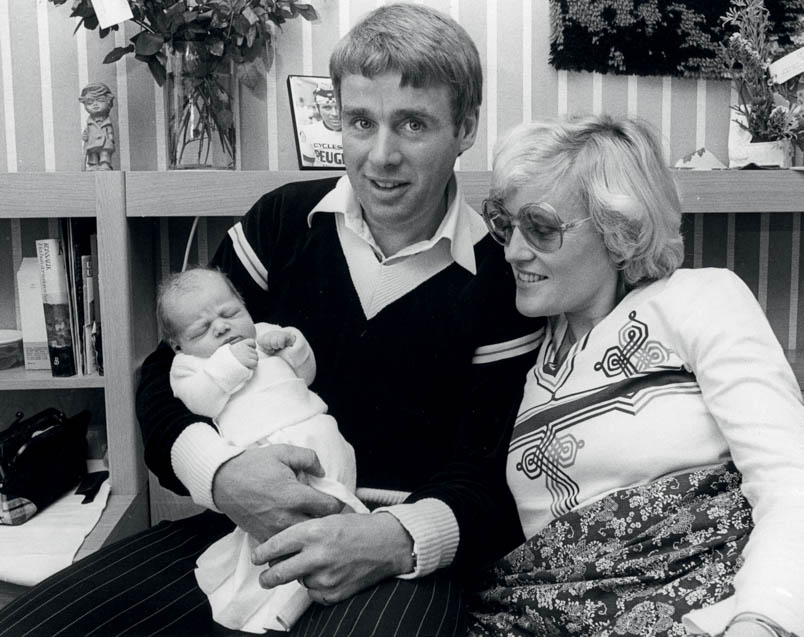
Beaming with pride at the birth of his son Bjorn
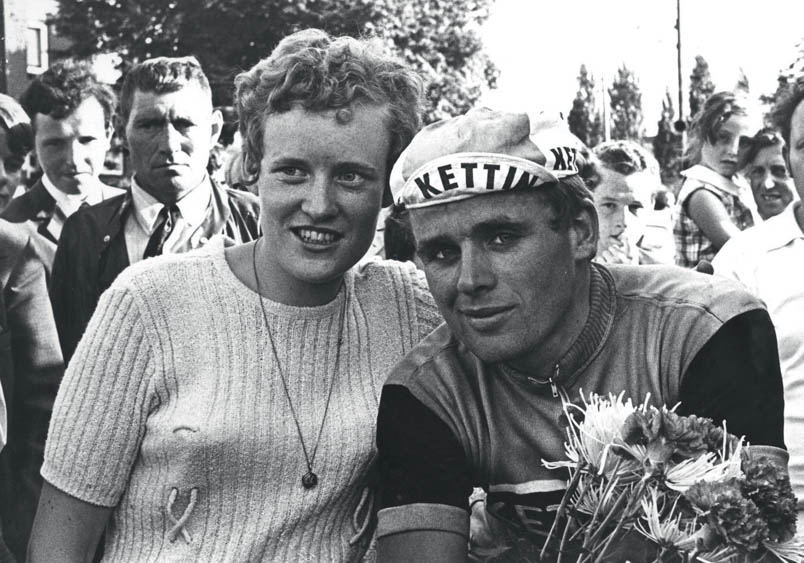
July 1970: Hennie Kuiper wins in Ransdaal. Ine never leaves his side. Kuiper: ‘At Ketting we got three caps a year. They went in the wash every time, as you can see…’
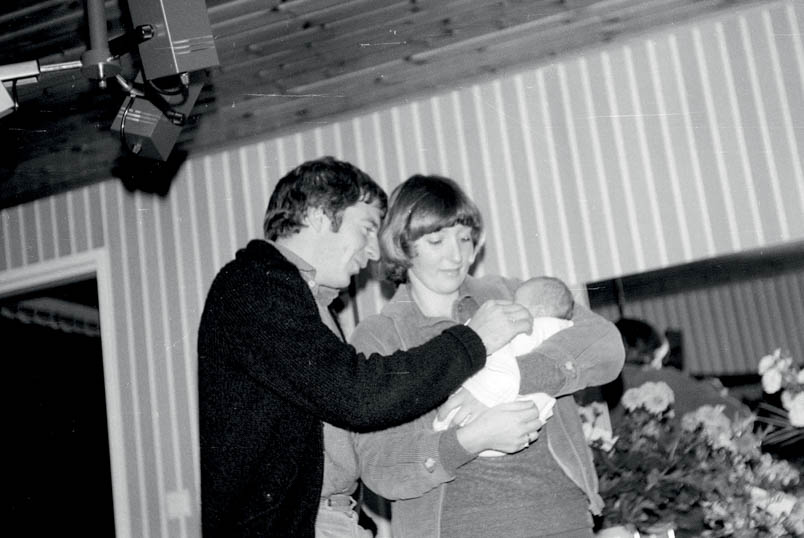
José and Jeanne De Cauwer become part of the Kuiper family circle as godfather and godmother when Bjorn is born
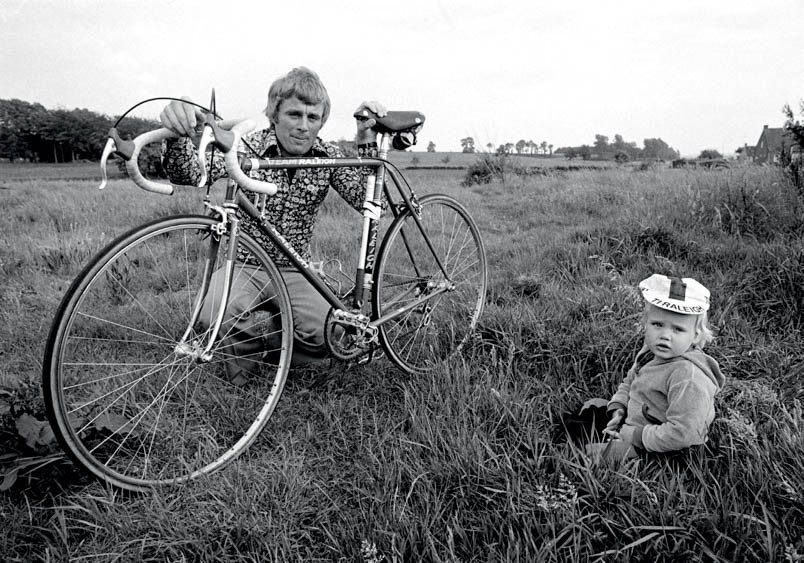
Where Hennie once began cycling among the fields of Twente, his son Patrick also gets a taste of cycling in a rural setting. Patrick, however, does not fall for the sport the way Hennie once did
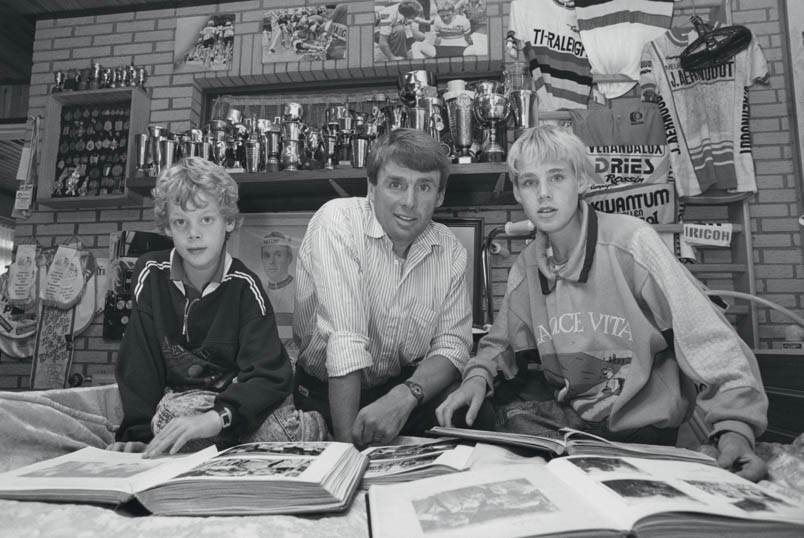
With great care and a deep-rooted respect for the past, Hennie Kuiper collects the relics of his own history. For his sons Bjorn (left) and Patrick, their father’s history is preserved in sturdy scrapbooks and in a bedroom of Hennie Kuiper’s present home. In April 2017 a real Hennie Kuiper Museum was added. Bjorn in particular takes a keen interest in his father’s past
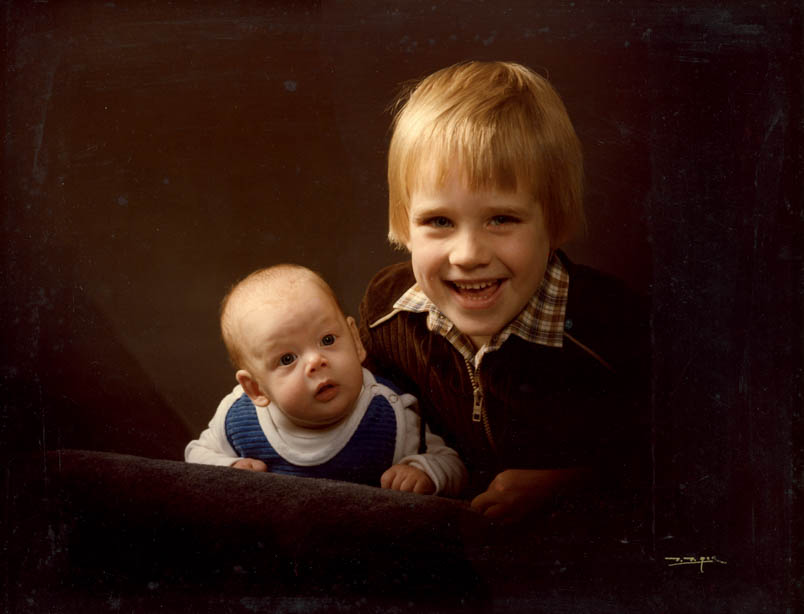
Bjorn and Patrick, the children of Hennie and Ine. The younger is named after the tennis star Björn (with umlaut) Borg and the elder after Patrick Sercu
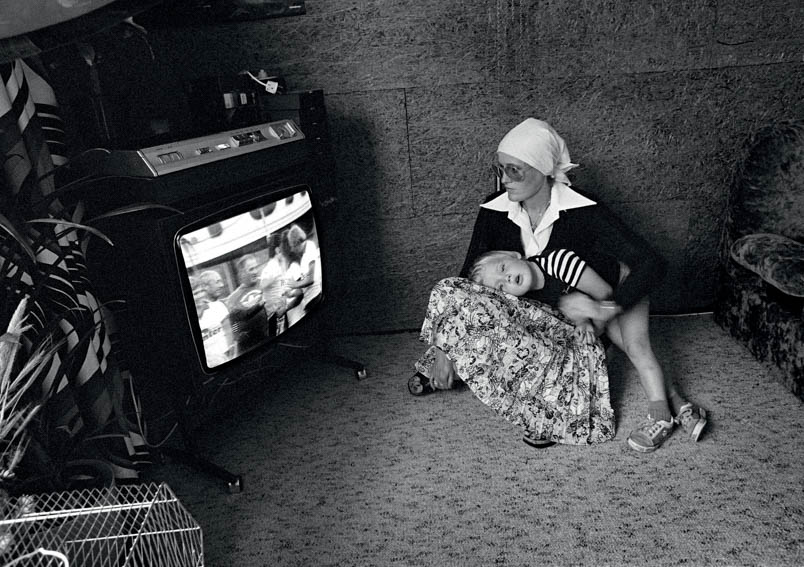
This is how things are usually divided in a cycling family: the husband races and brings home wages and prize money; the wife runs the household and is there for the children. During the 1977 Tour de France Ine watches television with Patrick on her lap, before she can travel to Paris to welcome her husband home as a hero on the Champs-Élysées
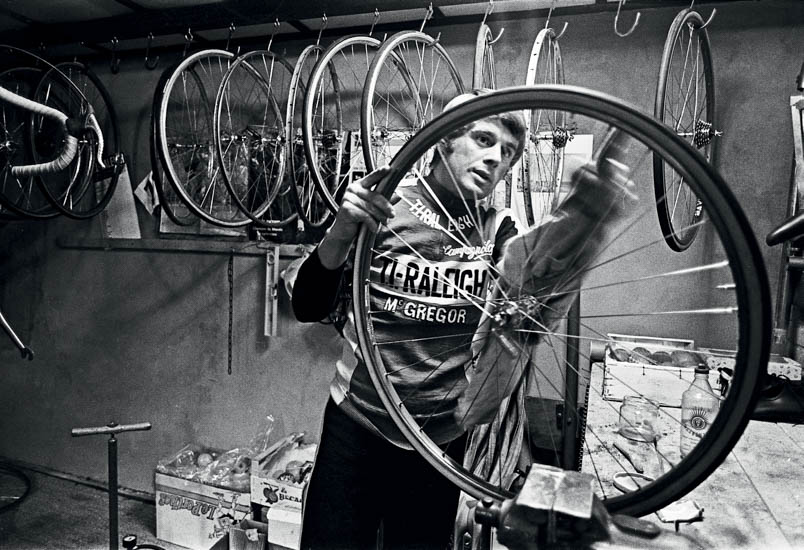
Hennie Kuiper has given his heart to cycling. He takes the profession very seriously. The wheels receive meticulous care
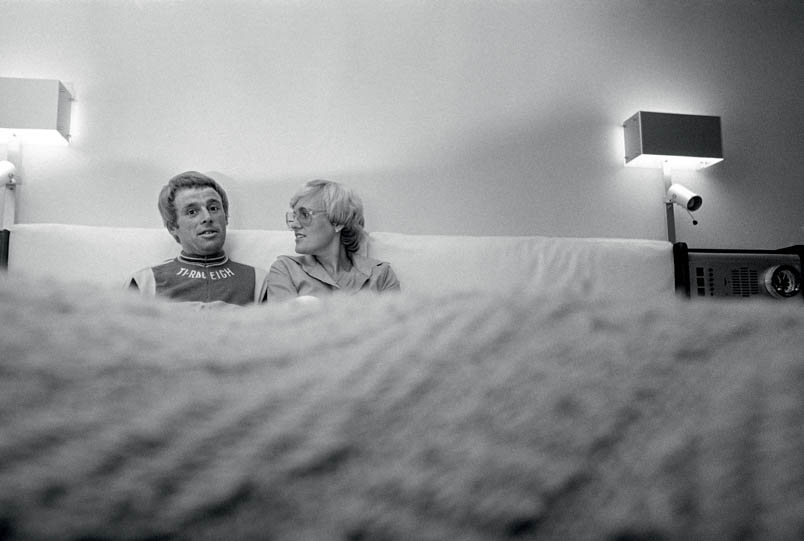
The 1977 Tour de France is over. Hennie and Ine rest on a bed in Paris. Although Kuiper came so close to the yellow jersey and to overall victory, his second place in the final classification still earns a satisfied look
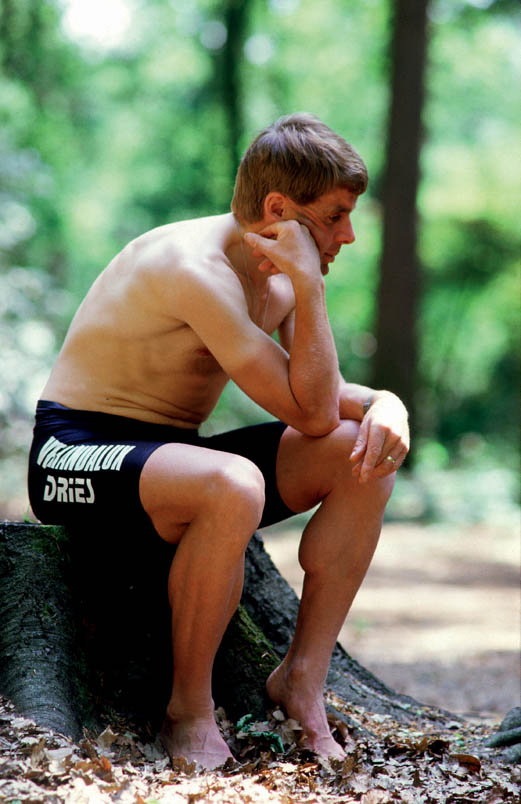
The photographer Berry Stokvis has Hennie Kuiper pose after Rodin’s statue ‘Le Penseur’. Hennie Kuiper, the thinker. The man without his Verandalux jersey finds it a fitting comparison
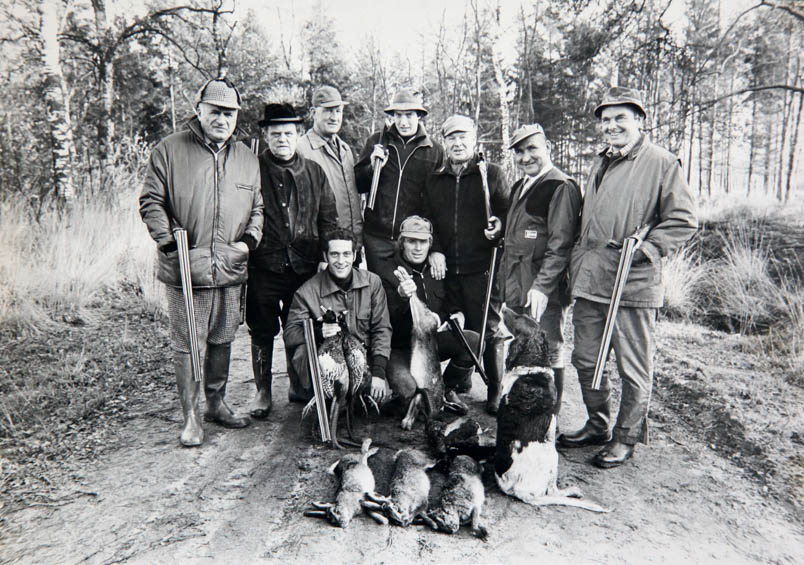
On 19 November 1978 Hennie Kuiper goes hunting in illustrious company in the woods near Esbeek. He shoots a pheasant straight away. Back row, left to right: football referee Leo Horn, the so-called ‘Jagermeester’ (master of the hunt), ‘Le Fou Pédalant’ Gerrit Schulte, Olympic clay-pigeon shooting silver medallist Eric Swinkels, the beater, ‘My heart stood still, but my Pontiac kept going’ Wim van Est, and Frisol boss Nico de Vries. Front: rider Tony Houbrechts and Hennie Kuiper. Clay-pigeon shooter Eric Swinkels came second at the 1976 Olympic Games in Montreal. He says of Kuiper the marksman: ‘A few weeks ago Hennie Kuiper came into my shop to buy a gun for hunting. I said to him, come along with me and let’s first see whether you can shoot straight. He did, and I was completely amazed by Hennie’s performance. Of the fifty clays he hit 47 in the very first series. I said to Hennie, listen, if you really train in this sport you could be world champion again’